The Biggest Concerns That People With Mobility Issues Have When Buying A Property
Purchasing a property is a significant decision for anyone and the property market hasn’t exactly been easy to navigate lately. However, the process comes with additional considerations and challenges for individuals with mobility issues. This article provides insights and guidance to help navigate this important life decision.
Accessibility of the Property
One of the primary concerns for buyers with mobility issues is the accessibility of the property itself. This goes beyond simply having step-free access to the front door; it encompasses the entire layout and design of the home.
Think about the width of doorways and hallways. Standard doorways in the UK are often too narrow for wheelchair users, typically measuring around 750mm. Ideally, doorways should be at least 900mm wide to accommodate most wheelchairs comfortably.
The layout of the property is equally crucial. Open-plan designs can be more navigable for those using mobility aids. Consider the placement of essential rooms like the bathroom and bedroom – having these on the ground floor can be a significant advantage.
Stairs can be a major obstacle. While stairlifts or home elevators can be installed, these are costly additions. A bungalow or ground floor flat might be more suitable and cost-effective in the long run.
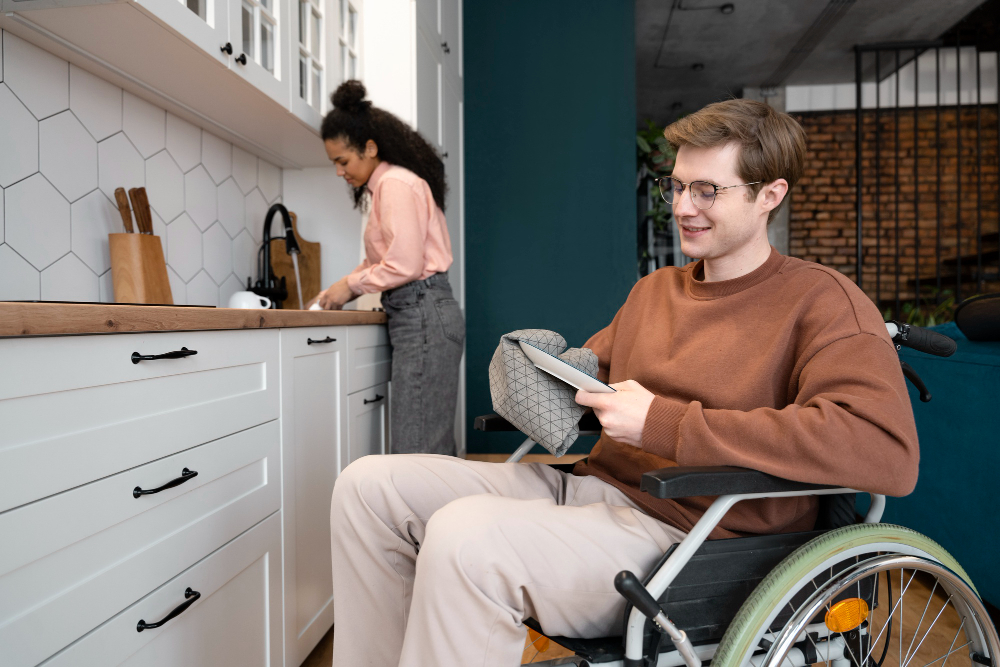
The kitchen and bathroom often require the most adaptation. Look for properties with spacious bathrooms that could accommodate grab rails, walk-in showers, or adapted baths. In the kitchen, consider the height of worktops and the accessibility of appliances.
Remember, while some adaptations can be made after purchase, extensive modifications can be costly and disruptive. It’s often more practical to find a property that already meets most of your accessibility needs.
Proximity To Essential Services
The location of the property is a crucial factor for anyone, but it takes on added significance for those with mobility issues. Proximity to essential services can greatly impact quality of life and independence.
Consider the distance to key amenities such as:
- GP surgeries and hospitals
- Pharmacies
- Accessible public transport links
- Shops and supermarkets
- Parks and recreational facilities
Remember that what constitutes a “manageable” distance can vary greatly depending on individual mobility levels and the availability of suitable transport options.
Research the area thoroughly before committing to a purchase. Visit at different times of day to assess factors like traffic, noise levels, and the general accessibility of the neighbourhood. Are pavements well-maintained and wide enough? Are there dropped kerbs at crossing points?
It’s also worth investigating local community support services. Some areas have better provisions for individuals with mobility issues, such as accessible community transport schemes or volunteer support networks. Buying a mobility scooter may also be a good decision. Mobility scooters allow for greater independence, and they’re easy to use. Mobility Solutions has a range of mobility scooters for sale, and they offer exceptional customer service.
Financial Considerations
Accessible properties or those with potential for adaptation may come at a premium, particularly in desirable locations. Factor in the potential costs of any necessary adaptations. Grants often don’t cover the full cost of modifications. It’s smart to get quotes from specialist contractors before proceeding with a purchase.
Consider ongoing maintenance costs as well. Some adaptations, like stairlifts or home elevators, require regular servicing and eventual replacement.
Insurance can be another financial consideration. Some insurers may charge higher premiums for adapted properties or for individuals with certain health conditions. Shop around for the best deals and get advice from insurance brokers experienced in dealing with accessibility needs.
It’s also worth exploring specialised mortgage products. Some lenders offer mortgages tailored to individuals with disabilities or long-term health conditions. These may have more flexible terms or factor in income from disability benefits.
Future-Proofing the Purchase
Mobility needs can change over time, and a property that suits you now may become challenging in the future. Look for properties that offer flexibility and the potential for further adaptation if needed. Single-story homes or properties with the potential to install a home elevator might be good options for future-proofing.
Consider the long-term suitability of the location as well. A rural property might seem idyllic now, but could become isolating if mobility decreases or if you’re no longer able to drive.
It’s also worth thinking about the resale potential of the property. While your primary concern is finding a home that meets your needs, considering how adaptations might affect the property’s appeal to future buyers can be prudent.
Legal and Regulatory Considerations
Understanding the legal and regulatory landscape is important when buying a property with mobility needs in mind. The Equality Act 2010 provides some protections and rights for individuals with disabilities, including in the context of housing.
If you’re buying a leasehold property, carefully review the terms of the lease. Some leases may restrict certain types of adaptations or require landlord permission for modifications. Ensure that any necessary adaptations are permitted before proceeding with a purchase.
For those buying in shared buildings, such as blocks of flats, consider the accessibility of common areas. While you may be able to adapt your own living space, you may have less control over shared entrances, lifts, or parking areas.
You may need to obtain planning permission or building regulations approval if you’re planning significant adaptations. Research local planning regulations and factor in the time and potential costs associated with obtaining necessary permissions.