Design Evolution of the iMac: Aesthetics and Functionality Through the Years
Since its debut in 1998, the iMac has undergone significant design transformations, reflecting Apple’s commitment to innovation, simplicity, and elegance. The iMac has evolved from a playful, colourful machine into a sleek, high-performance device that seamlessly integrates into modern workspaces. With each generation, Apple has refined both form and function, making the iMac not just a computer but a design statement. Examining this evolution provides insight into how Apple has shaped the personal computing landscape through aesthetics and usability.
The original iMac G3 was a revolutionary product that redefined how computers looked and felt. At a time when most personal computers were bulky, beige boxes, Apple introduced a translucent, colourful design that immediately captured attention. The G3 was available in a range of vibrant colours, making it a visually appealing alternative to the traditional PC. The decision to integrate the monitor and CPU into a single unit was also a major departure from the norm, setting the stage for the all-in-one design that has defined the iMac ever since. Beyond aesthetics, the G3 simplified computing for users by eliminating many of the complex connections found in traditional desktop setups.
With the introduction of the iMac G4 in 2002, Apple took another bold design leap. The G4 featured a unique “lamp-style” design, with a flat-panel display mounted on an adjustable arm attached to a dome-shaped base. This approach prioritized ergonomics, allowing users to adjust the screen height and angle with ease. The futuristic aesthetic made it a standout piece, but the design was short-lived, as Apple soon moved toward a more conventional flat-panel look.
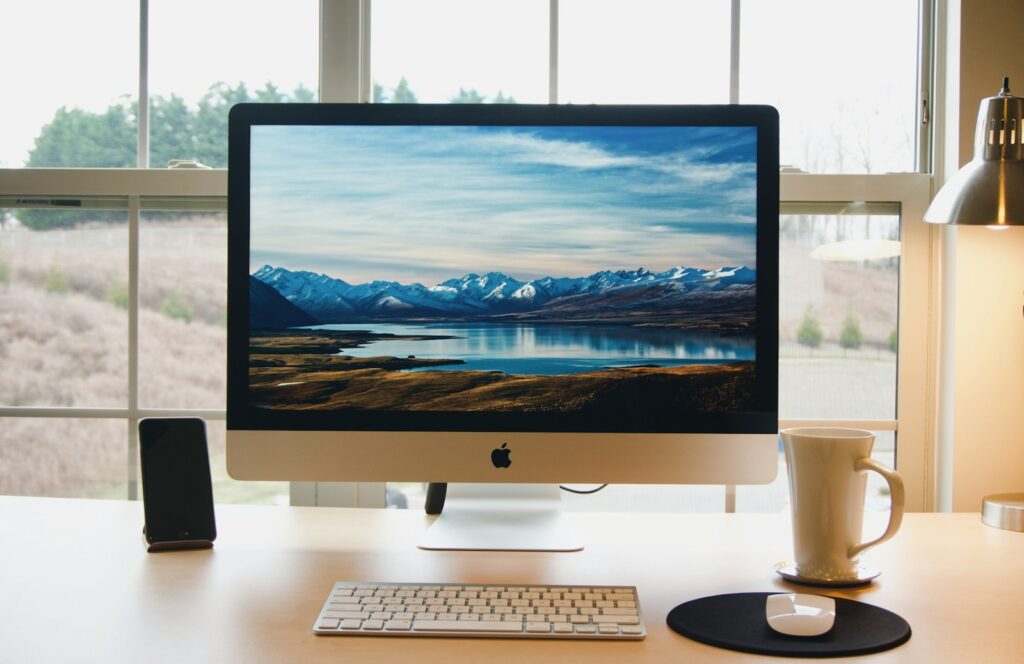
In 2004, Apple introduced the iMac G5, which abandoned the articulated arm in favour of a minimalist, all-in-one design. This version closely resembled the modern iMac, with a slim, white frame and a focus on clean lines. The transition to Intel processors in 2006 allowed for further refinements, leading to thinner models with increased performance. By the late 2000s, Apple had embraced aluminium as the primary material, reinforcing the iMac’s premium feel. The shift from plastic to metal not only enhanced durability but also aligned the iMac’s design language with Apple’s growing ecosystem of devices, including the MacBook and iPhone.
The introduction of the Retina display in 2014 marked another turning point for the iMac. Apple prioritized screen resolution and colour accuracy, making the iMac a powerful tool for creatives and professionals. The 5K Retina display set a new standard for desktop computing, offering stunning clarity and sharpness. This period also saw further reductions in thickness, with Apple achieving an ultra-slim profile that made the iMac even more visually striking.
Apple continued to refine the iMac’s design philosophy with the 2021 M1 iMac, which introduced vibrant colours reminiscent of the original G3. The return of bold hues, combined with a more lightweight and efficient design, made the M1 iMac a modern homage to its roots. The all-in-one unit featured a slimmer bezel, a minimalistic stand, and an overall cleaner look, aligning with Apple’s broader move toward simplicity and elegance. The introduction of Apple’s M-series chips also brought significant performance improvements, reducing the need for large cooling systems and enabling even thinner designs.
The latest iMac, powered by the M3 chip, continues this trend of refinement. The design remains minimalist and sleek, with a focus on sustainability and energy efficiency. Apple has maintained its commitment to a fanless, silent operation while enhancing the machine’s power and speed. With the advancements in display technology, the M3 iMac offers even greater colour accuracy and brightness, further cementing its status as a go-to device for professionals and everyday users alike.
While new models continue to push the boundaries of design and performance, many users still appreciate the charm and functionality of older iMacs. For those looking for an affordable and eco-friendly option, a refurbished iMac can provide excellent value. With Apple’s high build quality and long-term software support, older models remain viable choices for everyday computing needs.
The iMac’s design evolution is a testament to Apple’s dedication to both aesthetics and functionality. By consistently refining its form factor, material choices, and colour schemes, Apple has ensured that the iMac remains at the forefront of desktop computing. From the playful G3 to the sleek M3, each iteration has reflected the changing needs and expectations of users while maintaining the core principles of simplicity and elegance. The iMac’s journey demonstrates how thoughtful design can shape technology, making it more accessible, desirable, and intuitive for generations of users.