When Someone You Love Struggles Getting Out of the Bath
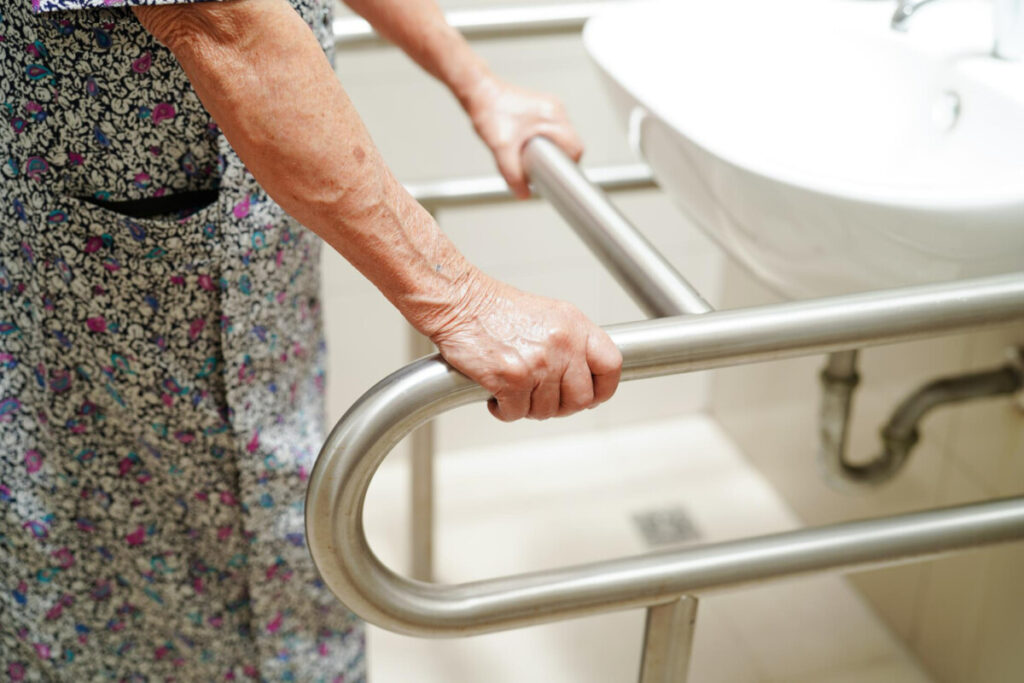
You notice it before they say anything. The hesitation at the bath edge. The grip on the sides that’s tighter than it used to be. The excuses about why they skipped a bath yesterday, and the day before that.
Getting in and out of a standard bath is physically demanding. Most people don’t realise this until the day it stops being manageable. A wet surface and a high rim are a bad combination. Genuinely risky. For millions of people across the UK, that’s what the bathroom looks like every morning.
Decades ago, nobody was designing bathrooms for bodies that change. Joints that stop cooperating. Strength that decreases quietly over years. A space meant for comfort became, for a lot of families, a room they worry about constantly.
Spotting the Warning Signs of Bathing Difficulties
The signs appear before the conversation does. Hesitating at the bath edge. Gripping the sides harder. Avoiding bathing without saying why. Most people won’t raise it. Months pass before a family member notices something is actually wrong.
Falls happen in bathrooms more than most people expect. Wet surfaces, no grab rails, awkward positions during transfers. Predictable outcomes. Not freak accidents.
Hip replacement recovery needs temporary support. Arthritis or Parkinson’s needs something permanent. Different problems entirely. Acting earlier tends to produce better outcomes than waiting until options narrow. This reflects what research shows about arthritis mobility limitations daily activities, where everyday movement becomes progressively harder without the right support in place.
Safety Risks of Traditional Baths for Those with Limited Mobility
A standard UK bath rim becomes a genuine obstacle for anyone with reduced strength or balance. The step over it, on a wet floor, without anything nearby to hold. That’s where many bathroom falls start.
No grab rails. Slippery surfaces. Not enough room to manoeuvre safely. Real risk, not inconvenience.
A bathroom fall means fractures, head injuries, hospital stays. Confidence takes a separate hit afterward. People who fall often stop bathing independently altogether and that dependency tends to increase rather than resolve.
The Walk In Bath Co manufactures UK-made walk-in baths with a low-threshold entry step, built-in seating, thermostatic controls, antimicrobial Biocote coating on bath and shower trays, and Ever Clear Glass technology on shower panels. Designed around the specific risks that make standard baths hazardous for people with reduced mobility. Not cosmetic modifications to an unsafe design. A different design entirely.
UK building regulations address accessibility in new builds and certain renovations. For existing homes, adapting the bathroom is a choice. Some families make it after an incident. Others before one. The outcomes tend to differ.
Environmental Factors That Increase Risk
Poor lighting creates problems that have nothing to do with mobility directly. Judging distances. Spotting wet patches on the floor. Deciding whether a surface is safe to step on. All harder when visibility is poor.
Condensation from inadequate ventilation keeps bathroom surfaces wet far longer than they need to be. Narrow layouts restrict movement and make safe positioning during transfers genuinely difficult. Grab rails are one of the simplest safety additions available anywhere in the home. Many UK bathrooms still don’t have one installed.
Accessible Bathing Solutions for UK Homes
Walk-in baths address the fundamental problem directly. The threshold step is only a few centimetres high. No lifting the leg over a full bath rim. No balancing on one foot on a wet surface. A Hampshire homeowner with arthritis made the switch. Less strain getting in and out. Daily bathing resumed without outside help.
Level-access walk-in showers take a different approach. No step at all. A Kent retrofit replaced a standard bathtub with a level-access shower, fold-down seat, fixed grab rails. Two days. Same footprint as the original bath. No structural work required.
Anti-slip surfaces, thermostatic controls, grab rails, easy-drain systems. What makes independent bathing achievable rather than something that has to stop. Most UK-made walk-in baths sit within a standard bath footprint, which means retrofit projects are less disruptive than families typically expect. This aligns with wider approaches to home adaptations for mobility needs in the UK, where practical changes inside the home can make daily routines safer and more manageable.
Practical Steps for Implementing Bathroom Modifications
An occupational therapist home assessment matches recommended adaptations to the person’s actual mobility needs. Specific to the individual. Not a general assumption about what older adults need. This reflects how occupational therapist home assessment mobility needs UK approaches focus on practical, personalised adjustments rather than standard solutions. Local councils and funding bodies require this assessment as part of the Disabled Facilities Grant process.
The therapist’s written report provides evidence that the adaptation is medically necessary rather than elective. Without it, funding applications rarely succeed. Local authorities use the report to confirm eligibility and direct resources toward modifications that address real needs.
The Disabled Facilities Grant covers bathroom adaptation costs up to a set limit for eligible homeowners and tenants in England, Wales, and Northern Ireland. The limit varies by region. Local authorities administer the process.
Certified installers familiar with Part M compliance can advise on whether planned modifications meet current standards. Using accredited installers reduces the risk of costly errors. After installation, spending time with the person using the new bathroom to check they’re comfortable with how everything works is worth doing. The adaptation only delivers if the person using it feels confident.
The goal isn’t a different bathroom. It’s the same routine, without the risk. Small changes help more than people expect. One adjustment can take away the hardest part of the day. Another brings back a bit of confidence. Do it earlier, and options stay open. Leave it too long, and simple problems turn into bigger ones. For many families, that shift is what finally makes the space feel safe again.


