Medway Named Among UK Areas With Poorest Roof Insulation Outside London
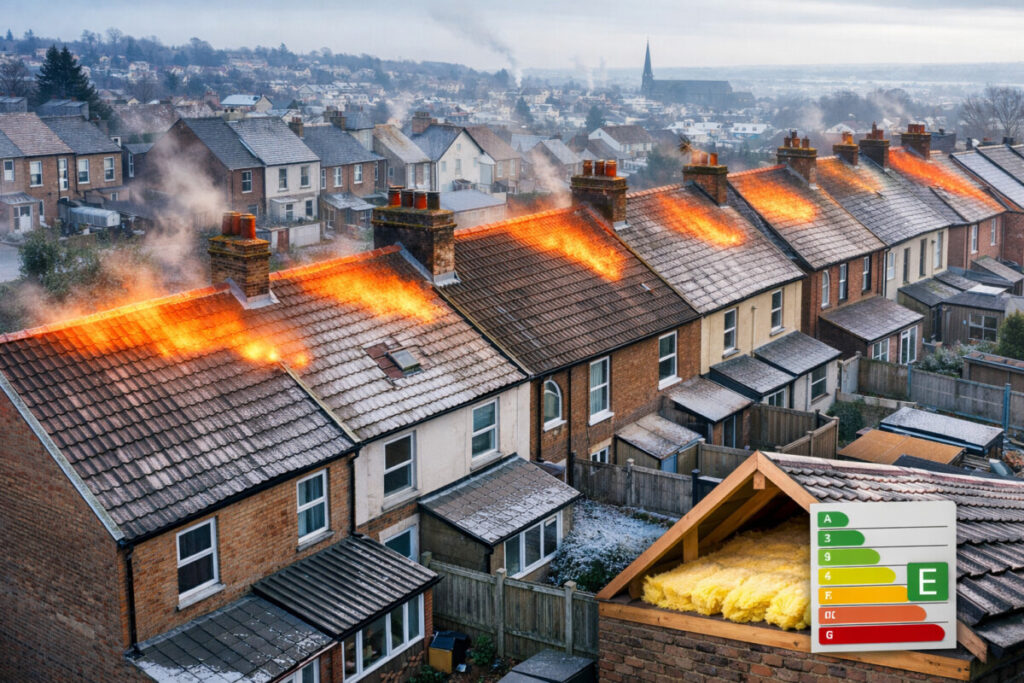
Medway has been ranked among the UK areas with the weakest roof insulation outside London, according to new research highlighting widespread heat-loss issues across the South East and East of England.
The study, carried out by Best Roofers, found that only 45.5% of homes in Medway meet “good” or “very good” roof insulation standards — placing the Kent authority eighth worst nationally outside the capital and 16 percentage points below the UK average.
South East dominates the worst-performing areas
Researchers analysed the latest 2022 Energy Performance Certificate (EPC) data from the Department for Levelling Up, Housing and Communities, examining roof insulation quality across 303 local authorities in England and Wales, excluding London.
The findings show that nine of the 10 worst-performing areas are located in the South East or East of England, with coastal towns and commuter areas particularly affected. These locations often contain older housing stock that is more difficult and costly to retrofit to modern energy efficiency standards.
Among major cities, Portsmouth recorded the poorest performance outside London, with just 44.7% of homes achieving a good or very good roof insulation rating.
Medway’s housing stock presents retrofit challenges
Medway’s low ranking has been linked to its industrial heritage and dense residential development, particularly older terraced housing in areas such as Chatham and Gillingham, where upgrading insulation can be complex.
Bottom 10 local authorities outside London for roof insulation
| Rank | Local authority | County | Region | Homes rated “Good” or “Very good” |
|---|---|---|---|---|
| 303 | Watford | Hertfordshire | East of England | 42.7% |
| 302 | Brighton and Hove | East Sussex | South East England | 43.0% |
| 301 | Borough of Spelthorne | Surrey | Greater London | 44.4% |
| 300 | Portsmouth | Hampshire | South East England | 44.7% |
| 299 | Reading | Berkshire | South East England | 45.1% |
| 298 | Luton | Bedfordshire | East of England | 45.4% |
| 297 | Adur District | West Sussex | South East England | 45.4% |
| 296 | Medway | Kent | South East England | 45.5% |
| 295 | Broxbourne | Hertfordshire | East of England | 45.5% |
| 294 | Castle Point | Essex | East of England | 45.5% |
Energy efficiency linked to bills and fuel poverty
Commenting on the findings, Alex Morrisey, Managing Director at Best Roofers, said the results point to deeper structural challenges.
“The concentration of poor performers in coastal towns and commuter locations suggests systemic issues with older housing stock and retrofit challenges.”
He added that the issue goes beyond comfort and has real financial consequences for households.
“Energy bills remain high and fuel poverty is becoming increasingly concerning for households across the UK, particularly for the vulnerable and elderly.”
“Roof insulation quality can affect your EPC rating and energy bills. A lot of heat can be lost through the roof and improving its insulation will ensure that your home does a better job at retaining warmth in the winter. Your heating system doesn’t have to work as hard which will lead to savings and an extended lifespan of your boiler.”
Government targets may bring improvements
Despite Medway’s current position, Morrisey said upcoming regulatory changes could help improve standards over time.
“While Medway’s overall roof insulation rating remains far below the national average, there are encouraging signs that the government’s plan for all privately-rented homes to have a minimum EPC C rating by 2030 will help reduce bills and the energy efficiency of the UK’s housing stock.”
He also highlighted the wider social benefits of improving insulation.
“National efforts to improve the heat retention of homes has particular benefits for lower-income households, the elderly, and vulnerable people. It’s worth noting that the government estimates this could save £240 a year on energy bills.”
Energy costs remain elevated
Although household energy prices have fallen since summer 2023, they remain significantly higher than pre-2021 levels, increasing the urgency of improving home insulation across the region.


