The 6 best AI HR software platforms in the UK 2026

HR in the age of automation
Running a company at scale in the UK has become notoriously cumbersome from an HR standpoint. Even if HR managers double as pseudo-legal experts and are aces at navigating the vast array of local labour regulations, managing it all in the modern age creates a massive administrative burden. For most forward-thinking companies, the obvious answer in 2026 is quickly becoming AI-powered HR software.
The best ones go beyond basic algorithms that can automate a few processes. For real impact, AI in HR software needs to be deeply embedded. However, given that new AI solutions seem to be popping up every other day, it can be difficult for HR professionals to know which ones work best for their needs.
In the UK, whether you’re dealing with revenue, customs, figuring out how to implement statutory sick pay, or pulling your hair out trying to untangle tax codes, a good AI-driven HRMS can help with it all. In increasingly AI-centred workplaces, it makes sense to automate your people management tasks too.
Thankfully, I’ve spent months analysing the best options out there so you don’t have to. If you’re an HR manager or a decision maker looking to streamline your company’s HR functions, these are the best AI HR software for UK teams in 2026.
My methodology for choosing the best AI-driven HR software for UK businesses
To ensure the HR software options I evaluated really were the best, I looked at everything from their administrative applications to how well integrated their underlying AI capabilities were. I also covered more advanced features like wage processing, people management, talent acquisition, and regulatory compliance.
From the AI side, I looked at how well machine learning was able to enhance day-to-day HR tasks. Features like speed, insights, and the level of human oversight were also considered. From a regulatory perspective, I assessed things like how good these systems were at staying on top of privacy laws and data management, as well as their cybersecurity offerings.
Lastly, to make sure my opinions weren’t jaded by personal interactions, I looked at what real users had to say on respected ratings sites. In the end, I found that the best AI-enhanced HR software solutions for UK companies were the ones that offered the best automation, while remaining agile enough to scale when the time comes.
Here are my top-six choices for the best HR software (with AI capabilities) available to UK companies in 2026.
1. HiBob
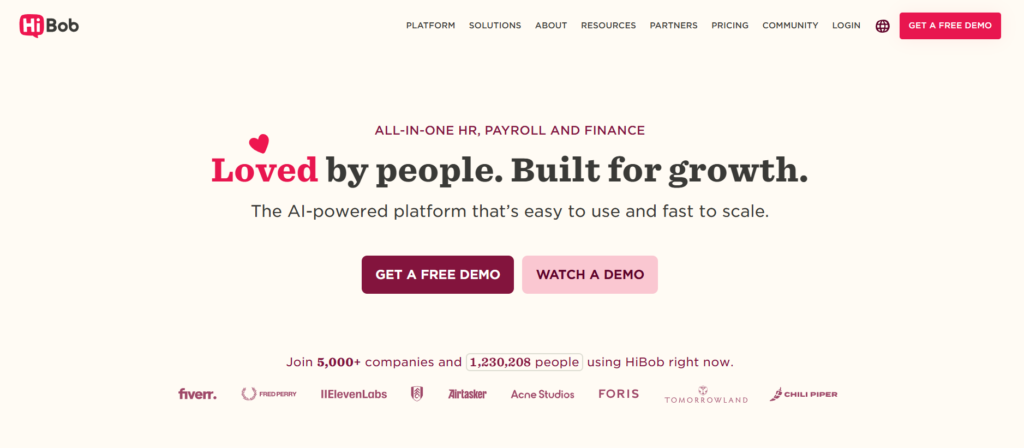
HiBob secures my top spot by providing a highly modern application designed for rapidly expanding mid-market and global enterprises. By bringing remuneration, talent acquisition, and staff planning into a single unified environment, it allows businesses to optimise their daily routines and grow without friction.
The way this vendor implements smart technology is exceptional. The automation is embedded right where managers actually work. It saves hours of administrative effort by drafting job advertisements, condensing appraisal notes, and handling repetitive workflows automatically. It also manages British regulatory demands with ease, connecting smoothly with regional payroll providers to guarantee accurate tax and statutory sick pay calculations.
Data protection is a major priority here. The vendor guarantees zero data retention by their machine learning partners. They never use your sensitive staff records to train outside models. This guarantees that all internal processes stay entirely private and compliant with strict European and British privacy directives.
Pros
- Replaces multiple disjointed tools with one comprehensive environment
- Excellent regional settings for international teams including cross border compensation links
- Smart tools that assist leaders while keeping humans in charge of final choices
- Highly engaging interface built for the modern professional
Cons
- The sheer volume of features might overwhelm a very small local shop
Best for
Scaling mid-market and multinational corporations seeking a secure, highly adaptable environment that prioritises both operational speed and staff satisfaction.
2. Personio
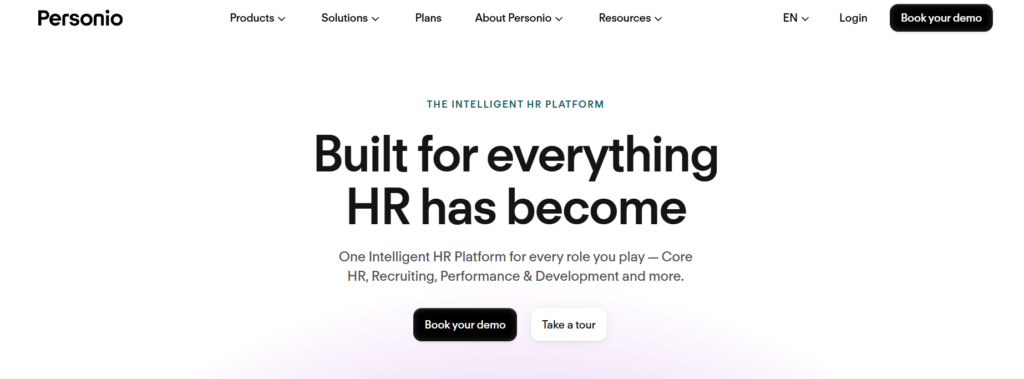
Originating from Germany, Personio delivers a suite of tools for hiring, logging attendance, and storing digital paperwork. You can explore what customers think by visiting Personio on G2.
While it offers a reliable base for everyday administration and respects European data hosting rules, buyers often point out a lack of deep configurability. The staff appraisal modules are quite rigid, which frustrates agile teams looking for continuous feedback loops. The cost structure is also hidden behind sales calls. Fees increase based on your headcount and which extra modules you activate, making budget comparisons tricky.
Pros
- Excellent central repository for digital documents
- Solid foundational tools for continental compliance
Cons
- Lacks deep configurability for intricate business processes
- Hidden costs that require speaking to a sales representative
- Compensation features vary wildly depending on the country
Best for
Small to medium European firms that require basic regulatory tracking and do not need highly adaptable appraisal frameworks.
3. BambooHR
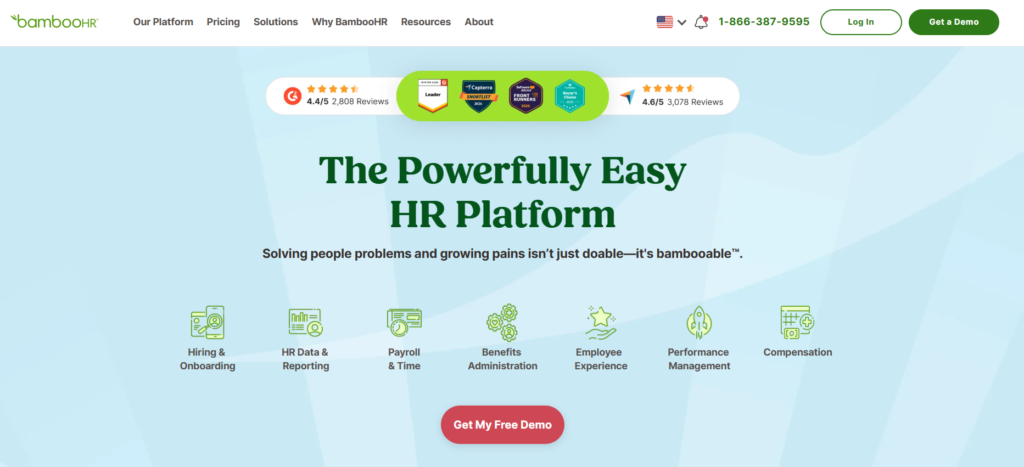
Often considered a stepping stone for small businesses moving away from paper files, BambooHR provides a neat dashboard for centralising staff details. You can read independent opinions at BambooHR on Capterra.
Despite its popularity, the application struggles to accommodate growing British firms. Customers mention that the recruitment module is too simplistic for heavy hiring periods. The analytics dashboard lacks the complexity required for deep workforce investigations. The compensation tools are heavily biased toward American users, rendering them largely ineffective for companies dealing with British tax codes and pension rules.
Pros
- Very clean and uncluttered visual design
- Reliable mobile application for simple requests
Cons
- Poor scalability for mid-market and global organisations
- Quote based pricing complicates financial planning
- Inflexible analytics and rigid process flows
Best for
Small American businesses that need a straightforward digital filing cabinet to replace manual spreadsheets.
4. Cezanne HR
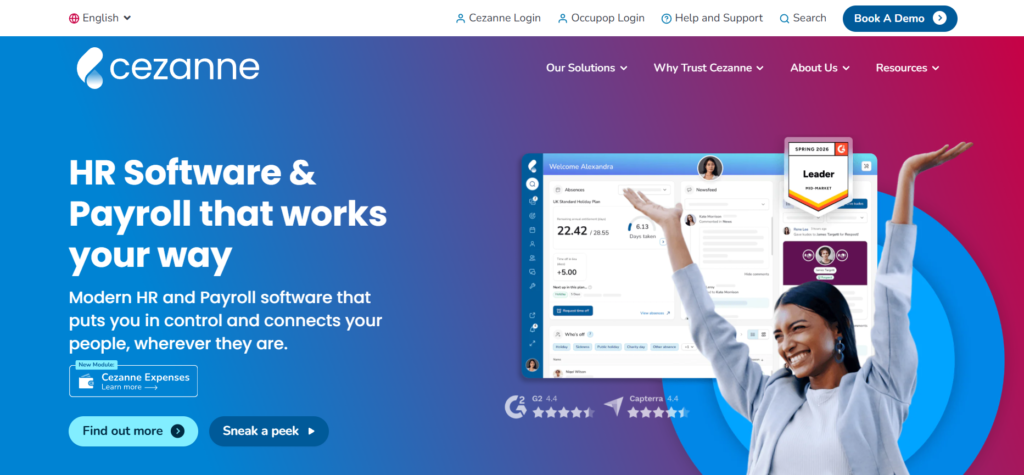
Developed specifically for the British market, Cezanne HR provides modules for core administration, new starter journeys, and staff appraisals. You can find independent reviews at Cezanne HR on G2.
Because of its domestic roots, it handles regional employment laws exceptionally well. However, its smart automation capabilities are practically non-existent compared to newer rivals. Customers frequently mention that the visual design feels old fashioned and clunky. Setting up the system requires heavy manual input, which can push deployment timelines out by several months.
Pros
- Deep understanding of domestic employment legislation
- Very granular security and access permissions
Cons
- Visual design feels dated and difficult to navigate
- Missing modern machine learning and automation tools
- Deployment is notoriously slow and complicated
Best for
Traditional British organisations that value strict local regulatory adherence over modern interfaces and smart automation.
5. Rippling
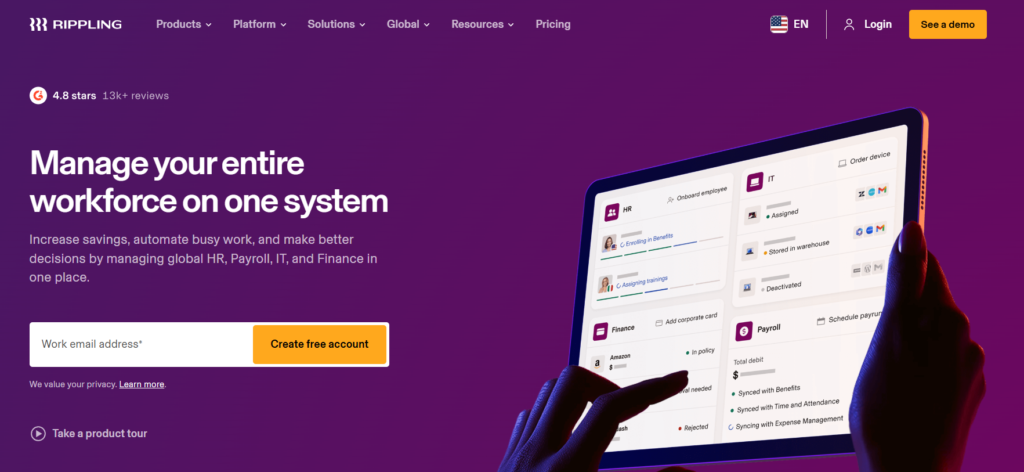
Fusing IT hardware control with personnel databases, Rippling lets companies control laptop assignments and compensation from one screen. Feedback is available at Rippling on Capterra.
This massive scope results in a very steep learning curve. Customers regularly state that the dashboard is cluttered and confusing. Technical support is a frequent source of frustration. The vendor leans heavily on automated chat bots and scheduled calls rather than instant human help. This causes major headaches when critical compensation errors occur.
Pros
- Powerful logic for automating new starter setups
- Merges computer fleet control with staff records
Cons
- Cluttered dashboard that overwhelms new users
- Unreliable access to human technical support
- Opaque pricing due to a heavy reliance on paid add ons
Best for
Firms that want to tightly link their computer hardware distribution with their new starter processes and have dedicated technical staff to run it.
6. UKG
Catering primarily to massive conglomerates, UKG is a heavyweight system focused on shift planning and intricate regulatory adherence. User perspectives are detailed at UKG Pro on G2.
The sheer scale of this application makes it entirely unsuitable for agile mid-market firms. Reviewers consistently highlight a painful deployment phase and a locked down architecture that prevents easy adjustments. The software is frequently described as slow to load. Extracting simple metrics, like a monthly headcount, often requires advanced technical knowledge due to the poor reporting interface.
Pros
- Incredible depth for managing complex shift patterns
- Built to handle massive corporate compliance demands
Cons
- Painfully slow deployment and configuration phase
- Sluggish loading times and an antiquated design
- Analytics require technical expertise to operate
Best for
Massive global corporations with thousands of shift workers and dedicated technical departments to maintain the software.
Final notes on choosing the best AI HR software for UK businesses
When I’m choosing an AI-driven HR system, I start by looking at where the business is right now, and where it is likely to go next. A growing UK company needs HR software that can keep up without being cumbersome. The right platform should make daily work easier, while still supporting expansion into new markets.
For me, HiBob stands out as the number one choice by some distance. I like how it balances ease of use with strong functionality. It covers everything from onboarding to performance tracking, and the AI features actually help with decision-making rather than just sitting there as a gimmick. It feels practical, and that matters.
At the end of the day, I always come back to one question. Will people actually use this? If the platform feels natural and removes friction from everyday tasks, that’s how I know I’m making the right call.
FAQs about the best AI HR software for the UK
What makes a platform the best AI HR software UK companies can buy?
The leading applications weave smart automation directly into your daily tasks to cut down on manual typing while respecting domestic privacy laws. When utilising a system like HiBob, leaders get smart summaries and data highlights that assist them in making informed choices without surrendering human control. This ensures technology acts as an enabler rather than a replacement for good management.
How does smart automation improve staff appraisals?
Machine learning tools can review past feedback and offer constructive phrasing suggestions for managers. This allows leaders to draft impactful evaluations much faster while keeping the process fair and transparent. It guarantees that the focus remains on objective, measurable achievements rather than subjective opinions.
Is my company data safe with these new smart features?
Information security relies entirely on the specific vendor you choose. The safest applications guarantee that their machine learning partners retain zero data and never use your sensitive staff details to train outside algorithms. This is vital for staying on the right side of local privacy legislation and maintaining trust with your workforce.
Do I need a separate compensation system if I buy this software?
This depends entirely on the vendor you select. Some applications force you to connect third party tools to pay your staff, while comprehensive platforms include native multi-country compensation features to keep everything centralised. A unified system guarantees that tax codes and pension deductions are always correct without manual syncing.
Can mid-sized companies use enterprise software?
While mid-market firms can technically buy enterprise applications, they usually find them far too complicated and inflexible. It is almost always better to choose an application built specifically for scaling mid-market businesses to guarantee a smoother user experience and a much faster deployment. Enterprise tools usually demand dedicated technical staff just to keep them running.