How Flexible Workspace Is Supporting Small Business Growth Across the South Coast
From the white chalk cliffs of Kent right the way over to the picturesque peninsula in Cornwall, the almost 400 miles of the south coast of England have become a popular home for many businesses, particularly SMEs. These SMEs are becoming the backbone of the South Coast economy, with Hampshire home to 67,000 enterprises, West Sussex to 42,000 businesses, employing nearly 379,000 people, and 33,225 businesses deciding that Dorset’s white sandy beaches are a good enough reason to settle up here.
This rise in maritime consultancies in Southampton and technology firms in Bournemouth, among many other SMEs across industries, has created a demand for flexible workspaces that enable businesses to make cost-effective decisions while still providing a suitable work environment for their teams. Many are starting to realise that flexible working space isn’t just an alternative option to the traditional office; it is the best tool they could rely on to support them.
Flexible Workspaces Are Proving Adaptable to Modern SMEs
Traditional offices provide businesses more than just a space to work. It offers long-term stability, control over the space, privacy, and dedicated facilities. However, for small businesses, while they might be able to enjoy these benefits, the negatives far outweigh them. They are committing to often multi-year leases, paying over the odds on business rates and utility costs, forking out for expensive fit-outs and furniture, and keeping on top of maintenance. For a small business trying to survive long enough to grow, this type of setup just does not work.
For SMEs along the South Coast and around the UK, fortunately, flexible workspace businesses and brands have developed a service that could adapt to their needs, supporting them as they grow. This is how:
- Tackles Stability Concerns
Small businesses in places like Dorset, Sussex, and Cornwall are so focused on keeping afloat in the early days that they tend to steer clear of offices and instead work from home, local cafés near the beachfront, and beachside hotel lounges. While this is fine to begin with, as growth occurs, an office setup becomes critical. However, just because office space has become a necessity doesn’t mean that rocky stability is no longer a concern. In fact, getting an office can create more instability, with increased spending and long-term leases.
Flexible workspaces reduce this spending, while accounting for the stability concerns that so many South Coast businesses have. They don’t expect upfront fit-out costs or 6-month deposits, and often include utilities and maintenance as part of the cost. This means businesses have more predictable monthly expenses and can invest the money saved with greater confidence to help grow the business with stability, whether through recruitment, training, or service/product expansion.
- Managed for You
With office space comes a whole new language to learn. You aren’t just supplying desks and computers; you are responsible for utilities, cleanliness, repairs, insurance, health and safety compliance, security systems, and more. The list goes on. For any business owner, this can add unnecessary stress. The good news is that creators of flexible workspaces recognised this added stress and found the perfect solution that works in harmony with the sea’s efforts.
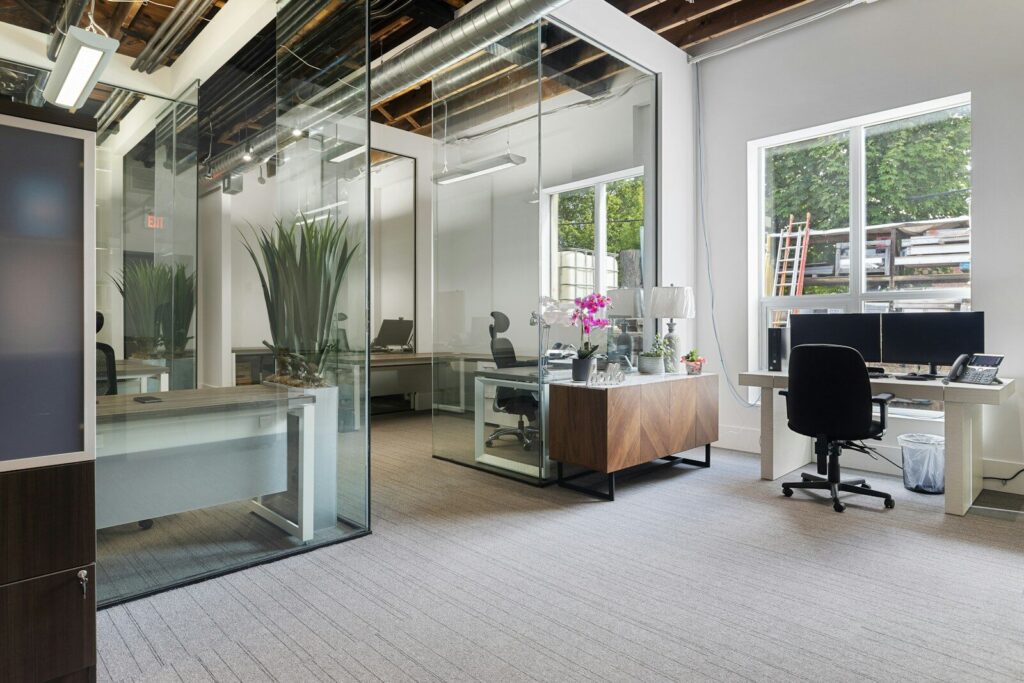
Workspace providers like Regus, Basepoint and BizSpace offer flexible offices in locations like Dorset, Bournemouth, Fareham, and Hove in Brighton. Small businesses can enjoy blank canvases that they can customise to their liking, but as part of their monthly fee, they also get high-speed Wi-Fi, the latest IT and telecoms, meeting rooms, and centre managers who are on hand to help businesses navigate office life. Serviced offices take this a step up. You don’t have to worry about a thing other than your business. As well as everything you get in a managed office, a serviced office provides a fully furnished space, reception staff, and cleaning as standard, included in the monthly fee. This means you’ve got more time for your business and definitely a stroll down to the beach on your lunch hour for a spot of fish and chips.
- Easier Scaling without Stress
Many SMEs have seen the benefits of being near the coast in recruitment and retention. People want to soak up that sea breeze, have access to green spaces, unwind on their days off effortlessly on the beach, and enjoy much shorter commutes. The last thing SMEs therefore want to do is relocate further inland to traditional office space that accommodates larger companies. Recruitment will be tougher and retention even harder, which could impact how stable your business is.
With a flexible workspace, you can remain as close to the coast as you want and simply scale up within the same building. Of course, it may be that you don’t need more physical working space, but need additional space in the form of meeting rooms, event spaces, breakout areas, and conference facilities. Flexible working spaces are specifically designed for businesses with these needs, serving as communal areas for all businesses located here. With this setup, you don’t need to pay for an extra room that you use one or twice a week. Instead, you get this included in your standard monthly rental fee. All you have to do is share it with other businesses, and it is incredibly cost-effective.
- Networking Opportunities in Communal Areas
Yes, you could base yourself in London and meet a lot more like-minded people at once, but many businesses start outside of London to save on costs, and that doesn’t mean they can’t still make the most of networking opportunities here. The rail connections linking coastal communities, including Brighton and Southampton, to London mean South Coast creative and digital businesses here can still build meaningful connections without the mammoth monthly costs. This has made such locations incredibly in-demand, particularly when you factor in the facilities they offer, which aid networking opportunities.
Small businesses rely on word of mouth in the beginning to build credibility and a solid reputation. This is where a great flexible workspace comes in so handy. For many small businesses trying to make connections, build relationships, and cement themselves within their industry, it can be much easier when you share communal areas in an office, such as meeting rooms, breakout areas, and kitchens. These shared areas create natural opportunities for conversation with other businesses, who can connect you with more, and so on.
- Polished Image without the Cost
SMEs want to show their professionalism, but at what cost? An extra £100 a month or more? Most businesses won’t see the benefit of this and risk appearing less professional, but a simple solution exists to provide you with the best of both worlds: a flexible workspace. You pay lower prices and still have access to professional facilities like meeting rooms and reception areas. When clients or, more importantly, prospective clients want to meet you in person, you can skip the local beach hut café and be greeted by friendly, welcoming staff who show them to your meeting room, where you can hold your consultation.
Flexible workspace, particularly along the South Coast, is proving to be ever in demand and for such clear reasons; they can properly support SMEs as they navigate rough waters, so for anyone considering their options, see this as the opportunity you’ve been seeking.


