Portsmouth Named UK’s Most Stressful City to Move House, While Wrexham Tops List for Easier Moves
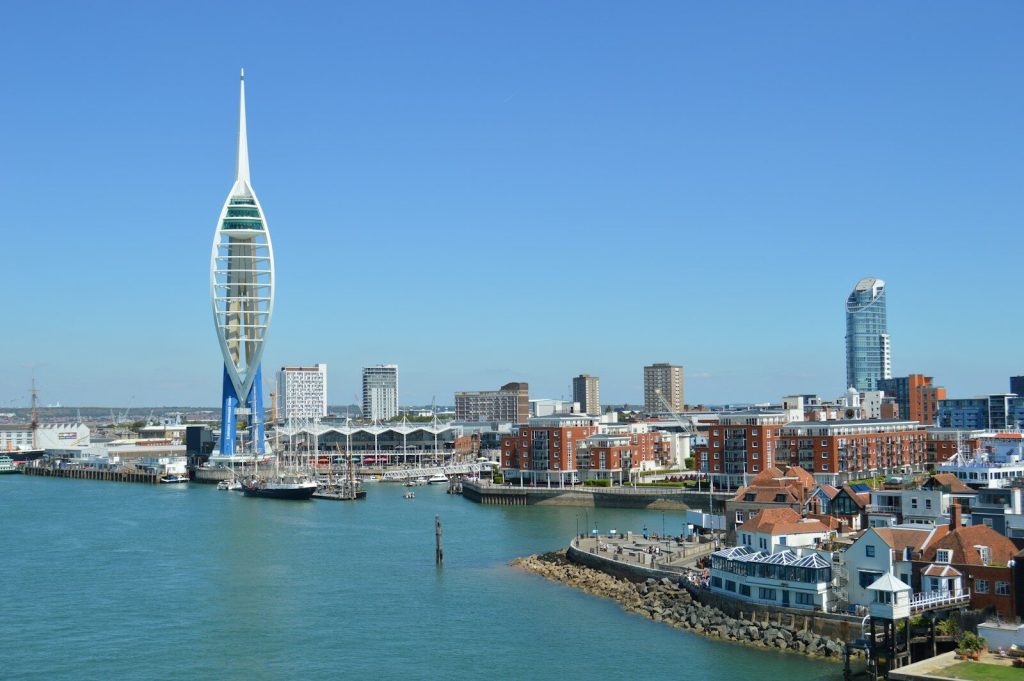
Portsmouth has been named the most stressful UK city to move house to, ahead of London and Bristol, according to new research examining housing types, population density and property selling times.
The study, carried out by courier marketplace Porta Delivery, analysed 50 major UK cities to identify locations where moving home could present the greatest logistical and property market challenges.
At the opposite end of the rankings, Wrexham emerged as the least stressful city to move to, followed by Doncaster and Swansea.
Researchers assessed four factors considered likely to make moving more complicated: the proportion of flats and apartments, the percentage of terraced properties, population density and the average time taken to sell a home.
Each factor was given equal weighting to produce a moving stress index score out of 100, with higher scores indicating potentially greater difficulties.
The findings highlight how property types and local infrastructure can influence the practicalities of moving home, particularly in densely populated urban areas where parking, loading restrictions and access to buildings may create additional challenges.
Portsmouth Tops the Rankings Ahead of London
Portsmouth recorded the highest moving stress score of 100 out of 100, making it the most challenging location among the 50 cities assessed.
The Hampshire coastal city has a population density of approximately 5,150 residents per square kilometre, while 35.5% of its housing stock consists of flats and apartments.
A further 43.4% of properties are terraced homes, which can present practical difficulties for removal companies where streets are narrow or parking is limited.
Homes in Portsmouth also take an average of 161 days to sell, according to the study.
London ranked second with a score of 93.9, despite having the highest population density in the research at 5,598 residents per square kilometre.
More than half of London’s housing stock, 54%, consists of flats and apartments, while 21.3% is made up of terraced properties.
The capital also recorded an average property selling time of 170 days.
Bristol took third place with a score of 85, reflecting its combination of relatively dense housing, a substantial proportion of flats and terraced properties, and an average selling time of 167 days.
Liverpool followed in fourth position with a score of 82.9, while Reading completed the top five at 82.8.
Reading recorded an average selling time of 177 days, among the longest in the top 10.
The 15 Most Stressful UK Cities to Move House To
| Rank | City | Moving Stress Score |
|---|---|---|
| 1 | Portsmouth | 100.0 |
| 2 | London | 93.9 |
| 3 | Bristol | 85.0 |
| 4 | Liverpool | 82.9 |
| 5 | Reading | 82.8 |
| 6 | Manchester | 81.8 |
| 7 | Southampton | 80.9 |
| 8 | Kingston upon Hull | 80.2 |
| 9 | Luton | 78.5 |
| 10 | Norwich | 77.6 |
| 11 | Coventry | 77.3 |
| 12 | Cambridge | 76.7 |
| 13 | Leicester | 75.7 |
| 14 | Southend-on-Sea | 75.3 |
| 15 | Brighton & Hove | 74.2 |
Source: Porta Delivery, analysis of 50 UK cities.
Housing Density and Property Types Influence Moving Difficulties
Manchester ranked sixth with a moving stress score of 81.8, reflecting its high population density and the prevalence of apartment developments.
Flats and apartments account for 34.6% of its housing stock, while population density stands at 4,773 residents per square kilometre.
Southampton followed in seventh place with a score of 80.9. The city has a particularly high proportion of flats and apartments at 41.5%.
Kingston upon Hull ranked eighth, with its score of 80.2 influenced partly by the prevalence of terraced housing, which accounts for 46.7% of properties.
Luton and Norwich completed the top 10, scoring 78.5 and 77.6 respectively.
Interestingly, Luton recorded an average property selling time of 181 days, suggesting that buyers and sellers could face a relatively lengthy transaction period.
Further down the rankings, Brighton & Hove placed 15th, with half of its housing stock consisting of flats and apartments.
The research suggests that property layout and access arrangements can be just as important as the size of a city when assessing the potential challenges of moving home.
However, the index measures factors associated with moving difficulties rather than residents’ actual experiences of stress. Individual moves will vary depending on the property, location, removal arrangements and circumstances of the transaction.
Wrexham and Swansea Among the Easiest Cities for Moving Home
While several major English cities dominated the higher end of the rankings, two Welsh cities performed particularly well.
Wrexham was identified as the least stressful city to move to, achieving a score of just 13.9 out of 100.
According to the research, only 11.4% of homes in Wrexham are flats or apartments, while 19.1% are terraced properties.
The city also recorded a relatively low population density of 268 residents per square kilometre and an average property selling time of 91 days, considerably shorter than the figures reported for Portsmouth, London and Bristol.
Swansea was ranked third least stressful, with a score of 32.3.
The South Wales city recorded an average selling time of 120 days, with flats and apartments accounting for 15.9% of housing stock.
Doncaster placed second with a score of 31.1, while Warrington and Peterborough completed the five lowest-scoring locations.
The Five Least Stressful UK Cities to Move To
| Rank | City | Moving Stress Score | Average Time to Sell |
|---|---|---|---|
| 1 | Wrexham | 13.9 | 91 days |
| 2 | Doncaster | 31.1 | 150 days |
| 3 | Swansea | 32.3 | 120 days |
| 4 | Warrington | 37.0 | 143 days |
| 5 | Peterborough | 41.0 | 165 days |
Source: Porta Delivery.
The findings indicate that lower population density and a greater proportion of houses rather than flats may make moving arrangements more straightforward.
However, these factors do not necessarily mean that property transactions will always be quicker or less stressful, as mortgage approvals, conveyancing delays and property chains can affect buyers and sellers in any location.

Parking Restrictions and Building Access Can Cause Unexpected Delays
Ed Spece, CEO and Co-founder of Porta Delivery, said the practical challenges associated with moving are often underestimated.
“One of the most overlooked aspects of moving home is access. Our experience with courier networks shows that in densely populated cities, challenges such as parking restrictions, narrow streets, and apartment building access are often a bigger source of stress than packing itself. Movers who plan for these logistical hurdles early are far less likely to face delays, additional charges, or last-minute complications on the day.
“It’s interesting to see that many of the highest-ranking cities aren’t necessarily the largest in the UK. Portsmouth tops the list just ahead of London despite having a lower population, which shows that a combination of housing stock, density and market conditions can all contribute just as much to a stressful move.
“When planning a move, it’s often the practical access arrangements that have the biggest impact on how smoothly the day runs. Through our courier marketplace, we regularly see delays caused by restricted parking, permit requirements, limited loading bays and apartment buildings that require lift bookings in advance. Taking your time to plan is so important when moving house and will allow you to move to your ideal location without the added stress.”
How Homebuyers and Renters Can Reduce Moving Day Stress
Although some of the challenges identified in the research are beyond the control of individual movers, careful preparation can help reduce the risk of unexpected costs and delays.
People moving into city-centre flats or terraced properties should establish whether removal vehicles can park close to the entrance and whether local authority permits or temporary parking arrangements are required.
For apartment moves, it may also be necessary to reserve lifts, check building access hours and confirm whether managing agents impose restrictions on large deliveries.
Property buyers should also allow for potential delays in the transaction process, particularly where a chain of buyers and sellers is involved.
Obtaining removal quotations early, checking insurance arrangements and ensuring that access information is shared with the removal company can help avoid problems on moving day.
For landlords, developers and property managers, the research also highlights the importance of practical building access, particularly in developments with shared entrances, restricted loading facilities or limited parking.
Moving Challenges Extend Beyond Property Prices
While house prices and affordability often dominate discussions about the best places to live, Porta Delivery’s research draws attention to other factors that can influence the experience of relocating.
A property in a busy city centre may offer convenient access to employment, transport and amenities, but could also present additional challenges when moving furniture and belongings.
Conversely, locations with lower-density housing may offer easier access for removal vehicles, although this does not necessarily translate into a faster or cheaper property purchase.
The findings provide a useful reminder that buyers and renters should consider the practicalities of moving alongside property prices, location and housing preferences.
With Portsmouth, London and Bristol occupying the three highest positions, and Wrexham, Doncaster and Swansea recording the lowest scores, the study demonstrates the considerable differences in housing characteristics and moving conditions across the UK’s major cities.
Sources/References
Porta Delivery – UK Moving Stress Index research, supplied press release.


