New autism support launched for families and carers in South East
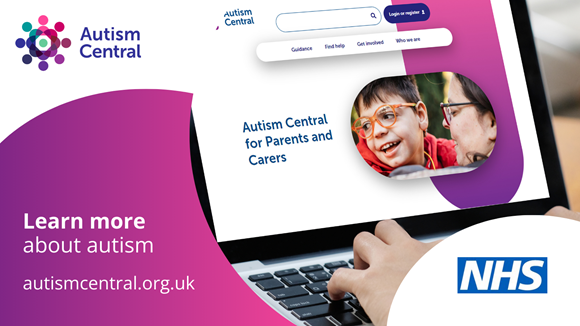
Support is available for families and carers of autistic children and adults thanks to a new, free education programme being launched in the South East.
Autism Central aims to build knowledge and understanding of autism and empower families and carers to advocate for autistic people they support to get the right understanding and adjustments in place across the services they use.
Commissioned by NHS England and informed by or co-produced with autistic people, parents and carers, the programme offers one-to-one and group sessions complemented by high-quality online learning and information.
Families and carers can also talk to people with similar experiences by joining workshops, drop-in sessions, coffee mornings or virtual meetups.
Each session is delivered by parents and carers of autistic people who have been trained to share their knowledge and experience with others, as peer educators.
There are seven regional hubs across England including a South East hub at Aspens, which has services across the South East.
Philippa Spicer, Senior Responsible Offer for Learning Disability and Autism – Workforce, Training and Education at NHS England, said: “We have learned that, talking to people who share similar experiences helps people feel understood and get the help they need”.
“Autism Central will work with families and carers of autistic people to become peer educators who will facilitate education and share their knowledge with others. They are here to listen, offer guidance, and tell others about services that are available in the local area.”
Ella, a peer educator for the South East hub, said: “As a service manager and a late diagnosed autistic woman, being a peer educator is very important to me. My hope is to help parents and carers to understand autism while showing that being autistic shouldn’t limit their loved ones to achieve their own potential.”
Autism Central is the latest example of the NHS’s commitment to improving health outcomes for autistic people – including improving assessments and rolling out the Oliver McGowan Mandatory Training on Learning Disability and Autism for NHS staff, and enhanced autism training for psychiatrists.
The NHS is focused on investing in community services so people can receive support close to home, with the number of people with a learning disability or autistic people in mental health hospitals falling by around a third since 2015, despite the number of people diagnosed with autism increasing significantly.
Tom Cahill, National Director for Learning Disability and Autism at NHS England, said: “We welcome the launch of Autism Central. Further sharing the experiences of autistic people, families and carers with their peers, will help to benefit and improve the quality of care and support.”
Lisa Myers, Programme Director of Autism Central, said: “Autism Central is helping families to learn more about autism and the support available to them. There is a wide range of curated and new material along with signposting to learning resources. This wrap-around learning benefits from the experiences of autistic people and their families – and prepares other families and carers to advocate to get the best from the services they encounter.”
The nine other organisations involved in Autism Central are Ambitious about Autism, Autism Alliance, Autism Education Trust, Autistica, British Institute of Learning Disabilities (BILD), Contact, Great Minds Together, National Autistic Society and the National Network of Parent Carer Forums.
Information, guidance and events are all available on the Autism Central website. Families and carers can explore topics such as diagnosis, employment and mental health, and find resources from partners and other trusted sources.
They can also search for a regional hub to find sessions in their area and sign up to access further learning resources and personal stories from other parents and carers.
The programme is looking for more parents and carers of an autistic person to become peer educators and help others. To find out more, contact your local hub at www.autismcentral.org.uk/find-help