Hidden costs of urban traffic on the braking system

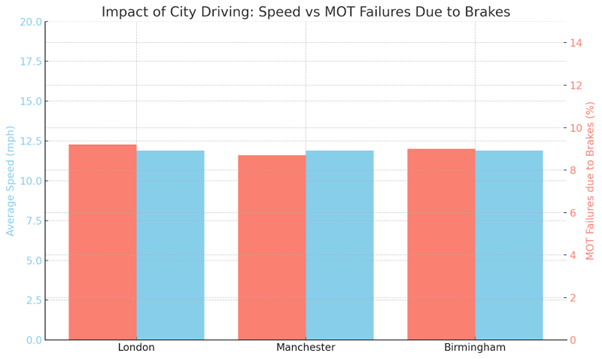
City driving is tough on cars. Stop-and-go traffic, short trips, and low speeds create a perfect storm for brake wear — especially in cities like London, Manchester, and Birmingham. According to traffic analytics firm INRIX, average speeds in these cities fell to just 11.9 mph in 2024, the lowest in recent years. That means drivers are using their brakes more frequently than ever before, leading to faster wear on critical components.
Why brake discs wear out faster in cities
Most drivers know that brake pads wear down with use. But what many overlook is that brake discs — also called rotors — suffer too. And in urban traffic, the stress on both front and rear discs increases significantly.
Each time a driver slows down at a junction, responds to congestion, or hits the brakes at a pedestrian crossing, friction builds between the pads and discs. Over time, this repeated contact causes the discs to thin, warp, or develop grooves. Unlike pads, which are regularly checked and replaced, discs often go unnoticed until performance drops or damage is visible.
Rear brake wear is more common than you think
Interestingly, the back of the car doesn’t get as much attention when it comes to braking. Yet DVSA (Driver and Vehicle Standards Agency) data shows that braking issues account for nearly 1 in 10 MOT failures in UK cities. In 2024:
- London reported 9.2% of MOT failures due to braking problems
- Manchester had 8.7%, and
- Birmingham followed closely with 9.0%
A large number of these problems involve rear discs, which are often neglected due to a lack of awareness. Rear brakes may handle less force than the front, but in slow-moving traffic, they’re activated more often than people realise — especially in vehicles with electronic brake force distribution or start-stop systems.
Brake wear and city driving
This visual compares average traffic speeds and MOT brake failure rates in London, Manchester, and Birmingham — showing a clear link between urban traffic patterns and braking system issues.
Early signs of disc wear
Spotting disc wear early can prevent accidents and save money. Here are some common warning signs:
- A grinding or squealing noise when braking
- Vibration or pulsation through the brake pedal
- Visible scoring or grooves on the disc surface
- Increased stopping distances
If you notice any of these, it’s time to get your brakes inspected by a qualified technician.
How to reduce brake wear in city conditions
While you can’t avoid traffic, you can reduce the impact it has on your braking system:
- Drive smoothly: Anticipate stops and avoid harsh braking.
- Avoid riding the brakes: Keep your foot off the pedal when coasting.
- Don’t overload your car: Extra weight increases brake effort.
- Regular maintenance: Have your braking system inspected during routine servicing.
Replacing parts before they fail not only keeps you safer, but also protects other components. Source buycarparts.co.uk recommends replacing the brake discs, brake calliper and brake pad set together as part of a service kit to ensure even performance and longer part lifespan.
Final thoughts
City driving is unavoidable for millions, but understanding how it affects your car’s brakes can help you take action before minor issues become expensive repairs. Don’t ignore the signs — safe braking relies on more than just pads. Keep an eye on the whole system, front and back, and you’ll stay safer on the road.
Image – Unsplash