Tower of London ranked Britain’s most authentic castle of all time
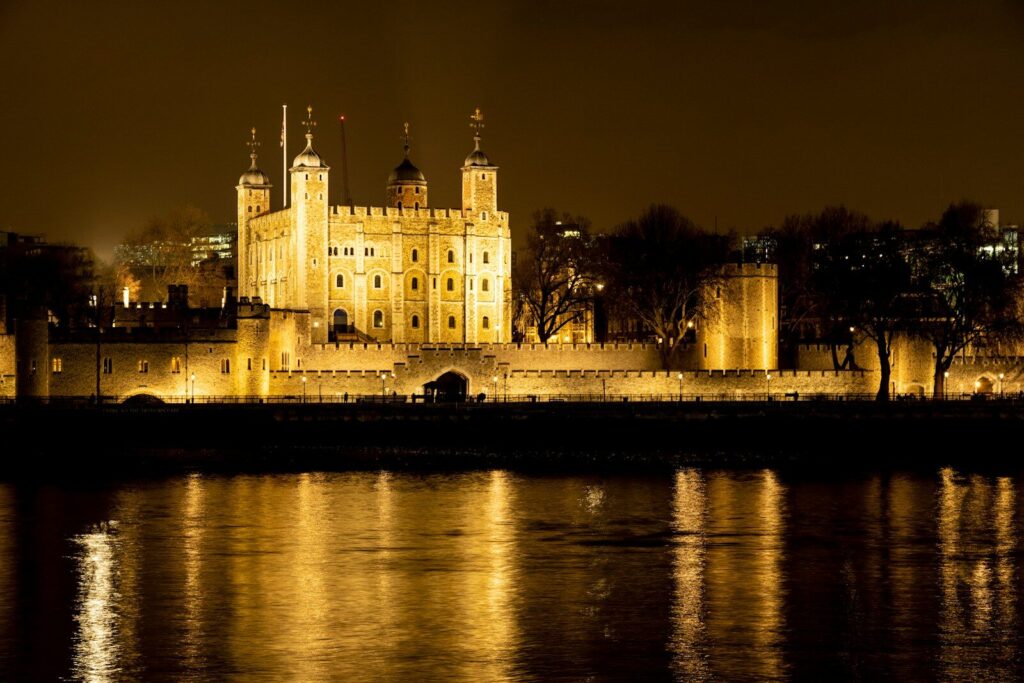
Millions of people visit the Tower of London every year, but few realise they are walking on the same stone surfaces laid nearly 1,000 years ago.
New research has revealed that the historic landmark isn’t just Britain’s most famous castle, but also its most authentic medieval experience, with vast sections of its original structure still intact.
The study found that visitors are not simply viewing history, they are physically moving through it. From worn spiral staircases to original courtyards and defensive walls, much of the medieval layout remains clearly visible today.
The Tower of London, which welcomed around 2.9 million visitors in 2024, topped a ranking of castles across England based on how closely they reflect their original medieval condition.
The study, conducted by PBSR CO, examined castles across England, assessing how much of their original stonework, structure and layout has survived.
While sites across the country made the list, London took the top spot, highlighting how one of the world’s busiest cities still offers one of the most immersive connections to medieval Britain.
At the heart of the Tower of London stands the White Tower, built by William the Conqueror in the 11th century. Nearly a millennium on, large parts of the original stonework remain untouched.
Alongside London’s top-ranking site, the study identified castles across England where visitors can still experience original medieval environments.
Top 10 castles for an authentic medieval experience:
| Rank | Castle Name | Region | Final weighted score |
| 1 | Tower of London | Greater London | 4.860 |
| 2 | Colchester Castle | Essex | 4.850 |
| 3 | Aydon Castle | Northumberland | 4.820 |
| 4 | Callaly Castle | Northumberland | 4.820 |
| 5 | Stokesay Castle | Shropshire | 4.820 |
| 6 | Dover Castle | Kent | 4.810 |
| 7 | Armathwaite Castle | Cumbria | 4.770 |
| 8 | Borwick Hall | Lancashire | 4.770 |
| 9 | Branthwaite Hall | Cumbria | 4.770 |
| 10 | Broughton Tower | Lancashire | 4.770 |
What sets these sites apart is not just how they look, but what remains beneath visitors’ feet.
Across many of the ranked castles, the surfaces people walk on today are the same ones laid centuries ago. Rather than reconstructed pathways or modern replacements, these are original materials shaped by time, weather and generations of footsteps.
This creates a far more immersive experience, where history is not just observed, but physically encountered.
Alex Essex, outdoor paving specialist at PBSR CO, explains why these historic surfaces are so significant: “What’s remarkable about these castles is that the stone underfoot was never designed with modern longevity standards, yet it has lasted for hundreds of years. Medieval builders worked with local materials and techniques that prioritised durability in a very practical sense. Over time, those surfaces have been shaped by thousands of footsteps, weather, and settlement. That wear is part of the story. When people walk across these stones today, they’re not just visiting history, they’re physically interacting with it in exactly the same way people did centuries ago.
“For homeowners with original stonework, there’s a lot to learn from this. Maintaining stone surfaces isn’t about overhauling them or using harsh modern materials, it’s about careful cleaning, gentle repairs, and preserving the natural character of the stone. Simple steps like avoiding acidic cleaners, ensuring proper drainage, and preventative maintenance can help these historic surfaces last for generations, just like the original builders intended.”
With heritage tourism continuing to grow seeing over 71 million visits to England’s historic attractions annually, experts say travellers are becoming more discerning, increasingly seeking out sites that offer genuine preservation rather than restoration.
The findings highlight a shift away from heavily restored attractions, instead shining a light on places where the medieval past still exists in its original form. And at the top of that list, London leads the way.
Methodology:
- Stone specialists at PBSR CO wanted to find out which castles are the most intact to their original condition for visitors and tourists to have an authentic medieval experience.
- To keep our ranking as fair as possible, we scored every castle in England using the same simple framework, focused on one question: how close does this place feel to the medieval building that first stood here?
- For each site we drew on publicly available data that describes its region, type (for example, tower keep, fortified manor house, enclosure castle), main construction date and current condition (such as intact, ruins or fragmentary remains). From this we created five scores, each on a 1–5 scale:
- Condition – castles described as intact or substantially intact received the highest marks, while ruins, fragments and earthworks scored lower or were excluded altogether.
- Castle type – classic medieval forms such as tower keeps, tower houses, pele towers, quadrangular and enclosure castles scored more highly than later artillery forts, sham or neo-romantic “castles” and lightly fortified country houses.
- Date purity – sites whose main fabric dates from the 11th-15th centuries scored higher than those whose surviving structure is largely later or heavily post-medieval.
- Degree of alteration – castles explicitly described as rebuilt, reconstructed or heavily restored were marked down, while those recorded as intact or only lightly restored scored more strongly.
- Visitor experience – we gave extra weight to castles where visitors can still clearly read the medieval layout and move through recognisably medieval spaces, rather than viewing only low walls or earthworks.
- Each score was then combined into a single “authenticity score”, giving greatest weight to condition and degree of alteration, followed by type, date and visitor experience. Castles with no visible remains or those primarily described as sham or neo-romantic were excluded from the ranking. The final top 10 are therefore the sites that best balance survival of original medieval fabric with a strong, on-the-ground sense of stepping back into the Middle Ages.
- All data is accurate as of April 2026.